How to Choose the Right Sun Gear for a Planetary Gearbox
The right sun gear is selected from the complete planetary geometry, center interface, operating duty and inspection needs—not from diameter alone.
Why this topic changes the sun gear decision
The first step is to define system-level sun gear selection in the context of the complete planetary stage. Sun, planet and ring gear tooth data share one center-distance relationship, and the number of planets can add assembly constraints.
Changing one sun-gear variable can alter ratio, contact, packaging or the mating gear requirements. Preserve the controlled calculation for replacement work and use a system-level review for new designs.
Practical design and replacement implications
Start with tooth count, module or DP, pressure angle, helix information and any specified profile shift. Then add planet and ring tooth counts and the number of planets.
The center connection—bore, key, spline, hollow center or integrated shaft—should be defined after the mesh is understood, not treated as a separate cosmetic feature.
What to control on the RFQ or drawing
| Item | What to define |
|---|---|
| Tooth system | Tooth count, module/DP, pressure angle, helix and profile shift/modification when applicable. |
| Planetary context | Mating planet/ring data and planet count when available. |
| Center interface | Bore, keyway, spline, hollow center or integrated shaft plus functional datums. |
| Obrigação | Rated/peak torque, speed, reversals/shock, life, lubrication and environment. |
| Processo | Controlled material, heat treatment, finishing and coating requirements. |
| Acceptance | Tooth/runout/dimensional inspection and required documentation. |
A practical product-interface example
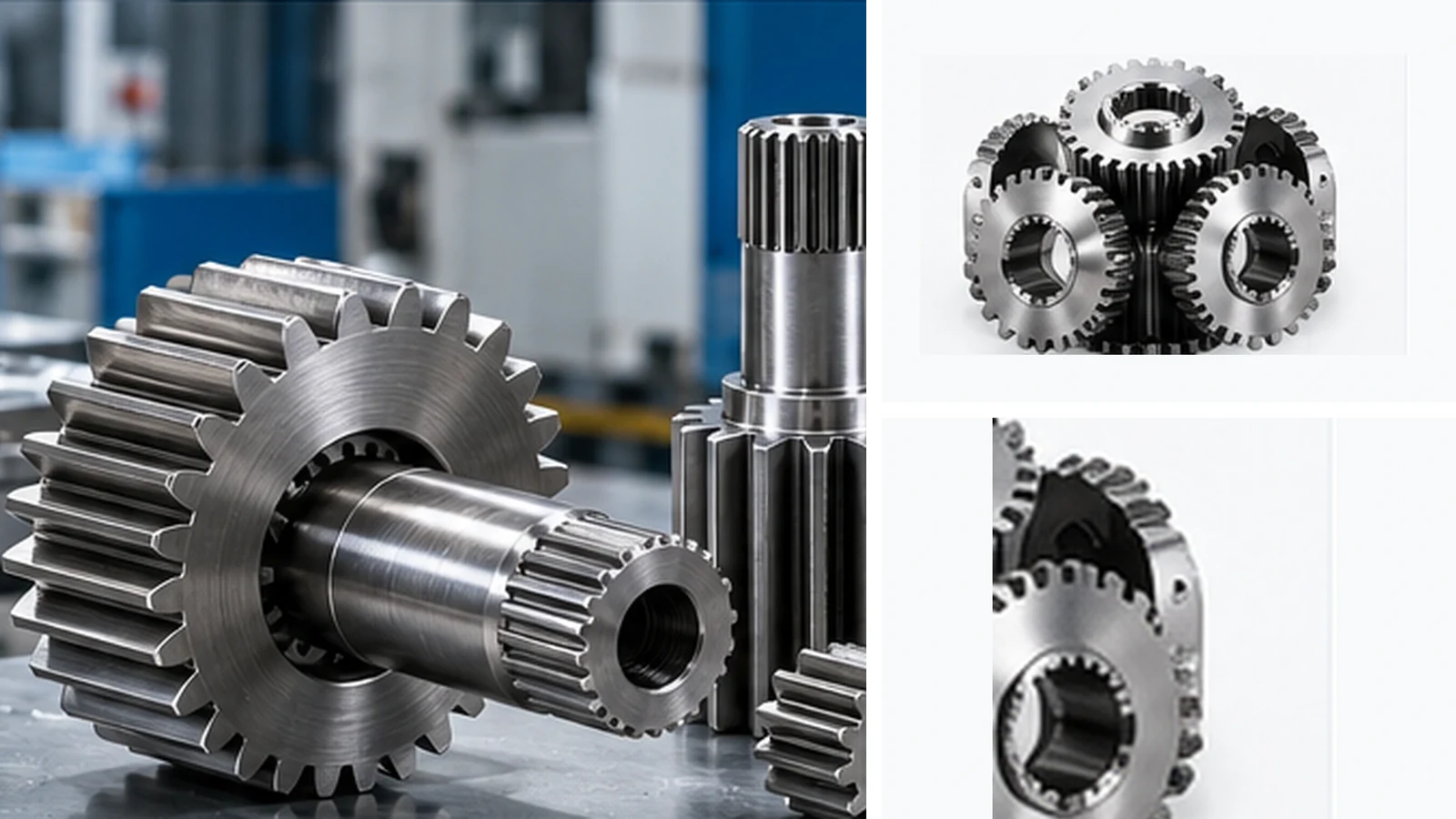
A planetary design may use several center connections. When torque must be carried through a compact toothed interface, splined sun gears are a natural option to compare with keyed bores or integrated sun gear shafts, especially when compact torque transfer and repeatable alignment are important.
The final choice should still follow torque, engagement length, alignment, service access and the controlled planetary drawing.
Frequently asked questions
Can one loose sun gear answer every design question?
Usually not. Mating gear data and the center interface provide important cross-checks.
Should material or tolerance be copied from a similar part?
Only when the controlled design allows it. Similar appearance is not proof of the same duty or specification.
What is the fastest way to get a useful quote?
Send the latest drawing or measured tooth/interface data, mating component information, duty, acceptance needs and quantity.
Solicitar um orçamento / Enviar solicitação de cotação
Send the drawing, mating gear information, center interface, duty, inspection needs and quantity. The article is selection guidance; the approved drawing controls production.