Sun Gear vs. Planet Gear vs. Ring Gear
The sun gear, planet gear and ring gear share the same planetary mesh but have different roles and manufacturing features.
Przekładnia słoneczna
The central external gear. It often carries a shaft or spline interface and may see high rotational speed.
Planet gear
External gears mounted on the carrier. Multiple planets divide load, so tooth geometry and carrier accuracy affect load sharing.
Ring gear
The internal gear surrounding the planets. Internal tooth geometry and concentricity must match the same planetary center-distance relationship.
Use the drawing as the controlled record
A technical guide can explain which variables matter, but the final sun gear must be approved from the actual drawing and operating requirement.
If a value is missing, identify it for confirmation instead of copying a dimension or material from a different supplier or gear family.
RFQ checklist
Send the sun gear drawing or measured tooth data, mating planet/ring information, interface dimensions, material/process requirements, duty, quantity and destination.
Deeper buyer guidance
Sun, planet and ring gears use related tooth geometry but have different interfaces, load paths and manufacturing constraints.
For new designs, use the complete planetary geometry and functional datums before deciding the process route. For replacement work, use photos and equipment references for context but let measured tooth and interface data control the new part.
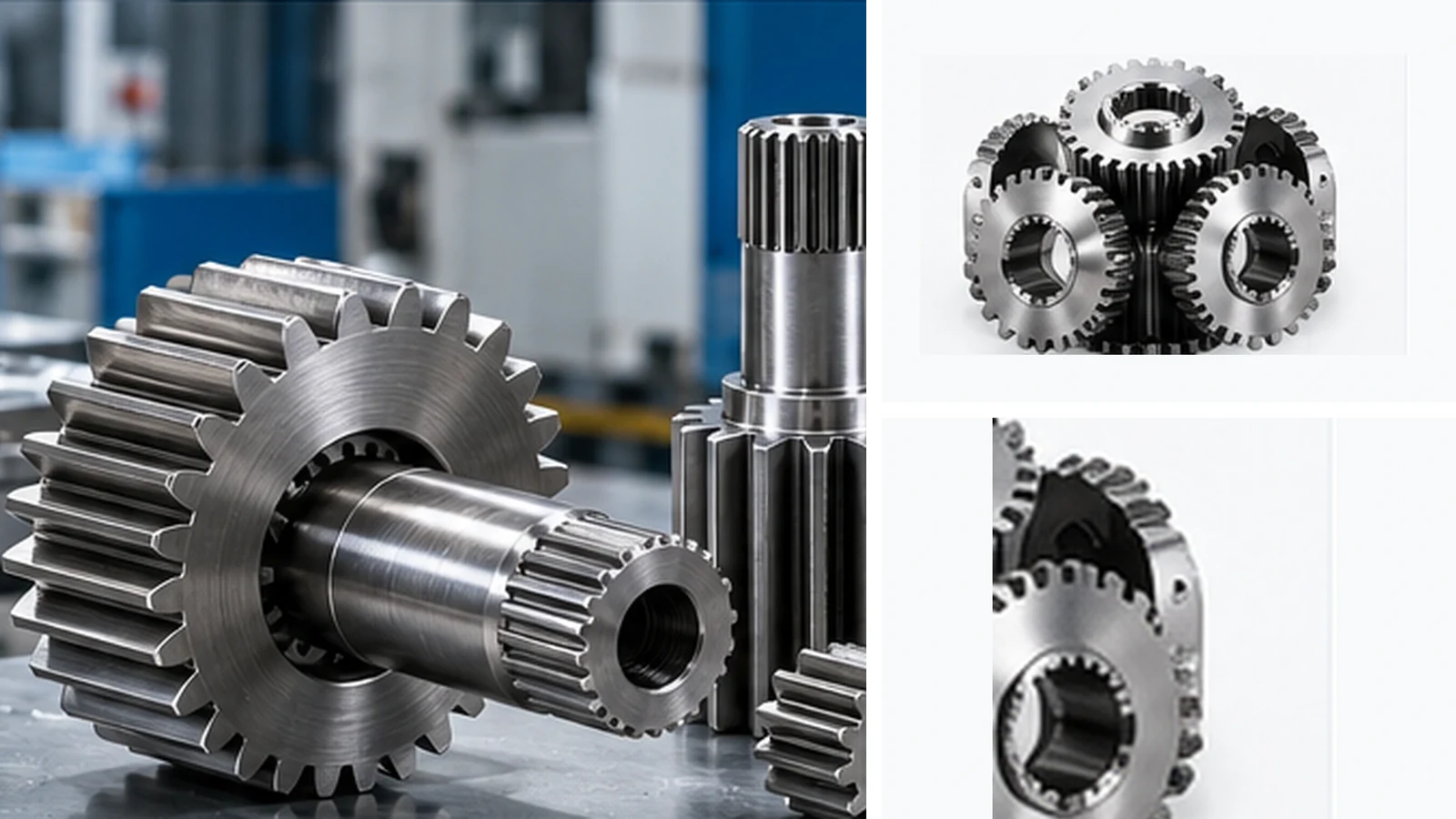
What to control on the RFQ or drawing
| Przedmiot | What to define |
|---|---|
| Planetary mesh | Sun, planet and ring tooth data plus planet count when known. |
| Center interface | Bore, key, spline or shaft features with functional datums. |
| Operating duty | Rated/peak torque, speed, reversals/shock, life and environment. |
| Material/process | Controlled material, heat treatment, finish and coating requirements. |
| Acceptance | Gear/runout/dimensional checks and required documentation. |
Frequently asked questions
Can a visual match confirm interchangeability?
No. Similar outside dimensions can hide different pitch systems, pressure angles, profile shift or interface fits.
Should mating gear data be included?
Yes whenever available, because planetary geometry is easier to verify as a system.
What if a value is unknown?
Mark it as open and provide the available sample, mating component or application data rather than guessing.
Poproś o wycenę / Wyślij zapytanie ofertowe
Prześlij rysunek, dane dotyczące zębów, informacje o elementach współpracujących, normę i ilość. Przed wyceną sprawdzimy interfejs.